



1 - Requirements for Starting a Car Rental Company
While the car rental market still has a bright future ahead of it, it’s important to first ask yourself whether this venture is really right for you before diving in headfirst. The skills and responsibilities of a car rental business owner, as well as relevant regulations: here are a few things to consider before getting started.
For whom? What skills are needed?
The skills needed to become a car rental company are really the same as for any entrepreneur - apart from the industry-specific skills, of course, which are :
-
The management
Invoicing, accounting, and administrative management are a large part of the activity, to ensure that the business is built on a solid foundation.
-
Marketing and sales
Defining your business concept, developing a marketing strategy, setting prices, building a brand image, and implementing a communication plan are all essential for ensuring that your car rental company becomes well-known and recognized by customers.
-
The customer relationship
As a service offering, car rental has a human element that contributes to the brand’s reputation. Mastering customer relations is therefore a key asset for this type of business.
Although there is no specific training program for the car rental industry, a BTS in tourism, business school training, or experience in customer service, consulting, or as an account manager will ensure you are well-prepared to launch your business.

What is the daily life of a car rental company like?
As with any new business venture, if you don’t have much experience in the field, you might have an idealized view of the job. So let’s take a look at the various day-to-day tasks handled by car rental companies.
-
Fleet management
A car rental company is, first and foremost, a fleet manager. It secures financing, negotiates loans with its banker, purchases vehicles, negotiates with insurance companies, handles vehicle registration, and ensures that vehicles are regularly maintained and undergo technical inspections, in collaboration with auto repair shops.
-
Marketing
The rental company offers its vehicles for rent. It must therefore promote its services through marketing efforts, sometimes managing its website and social media accounts on its own, creating content, responding to messages from prospective customers, setting rental rates based on peak seasons and turnover rates, and regularly analyzing its key performance indicators to ensure it stays on track with its cash flow.
-
Rental and reservation management
You must ensure that the vehicle is in good condition, deliver it to the customer if necessary, draw up the contract, conduct a pre-rental inspection, handle any unforeseen issues during the rental period (breakdowns, roadside assistance, vehicle replacement, or taking the vehicle to a repair shop), and then ensure that everything went smoothly when the vehicle is returned, while encouraging the customer to return or recommend the company by implementing a customer retention strategy.
-
Staggered hours
Not to mention that you will have to work shifted hours as well as weekends and holidays in order to keep up with your customers' schedules. In short, a busy day.
Do you feel up to it?
Great, so let's see what happens next.
What are the regulations?
As a car rental company, your business will be subject to four main obligations:
1 - Inform your prospects of your terms and conditions.
These are essentially all the questions potential customers ask themselves before making a decision: what are the rates, what do they include, what are the rental terms, what optional services are available, what are their obligations, what are the insurance terms, and so on. All of this information must be clearly displayed and easily accessible. The complete list of required information is available on the website economie.gouv.fr
2 - Create a quote.
While an invoice or contract is sufficient for many types of business transactions, when renting a car, you are required to provide a quote that includes the necessary information. (source: economie.gouv.fr).
3 - Check the condition of the vehicle.
This means that any vehicle about to be handed over to a renter must have been inspected so that, during the walk-through, the customer can be informed of any defects or issues found. You have a duty to ensure the customer’s safety.
4 - Purchase liability insurance.
This will provide you with coverage for bodily injury and property damage caused to third parties or suffered by your customers (source:economie.gouv.fr).
2 - Starting a Car Rental Business: Administrative Procedures
Choose the legal status
If you're starting out on your own, you might be tempted by becoming a sole proprietor. Let us stop you right there: this status is not at all suitable for a car rental business.
Here is a comparison chart of the different legal structures to help you better understand them and make an informed decision:
.png?width=749&name=PP%20-%20LB%20-%20Benjamin%20-guide%20cr%C3%A9ation%20dentreprise%20(2).png)
*To put it bluntly, this means that your home or your personal vehicle can be seized to pay off business debts, for example.
Becoming a car rental company: franchisee or independent?
It all depends on your business plan and your motivations, your skills, and your financial resources, as both the independent business route and the franchise route have their own advantages and disadvantages.
Are you entering a competitive market? Is marketing not really your thing? Consider a franchise.
.jpg?width=40&height=40&name=inconv%C3%A9nients%20(2).jpg) The forwardsRequirements for becoming a franchisee:
The forwardsRequirements for becoming a franchisee:
- You will benefit from the company's reputation and visibility. It will be much faster to get customers if you are called Avis or Hertz, than if you come with a brand new concept, but unknown to the public.
- You can be helped in the constitution of your fleet by the parent company, and that is good for the budget.
- Your communication budget (and your mental load on this subject) will be reduced because the company will be able to provide you with materials to reuse, not to mention that the brand will already be known by the general public.
- Getting insurance? Much easier when you are backed by a big name or an established company.
- In terms of training, the franchise is also a good plan because you can also benefit from documentation and programs set up by the parent company.
 The disadvantages of being a franchisee:
The franchise will really take a toll on your cash flow. Between the required personal investment (€20,000 on average), the entry fees including training and a starter kit (from €10,000 to €30,000), and the royalty fee (up to 15% of revenue), the financial burden can be downright prohibitive if you don’t have a solid financial foundation and/or substantial savings and/or a supportive banker.
You have a strong concept? You want to be in control of your decisions from A to Z?
Don't want to be limited in your choice of vehicles? Want the full entrepreneurial experience without compromise?
Starting your own rental agency is the perfect fit for you.
Insure your business, insure your vehicles
In addition to liability insurance, which is required for any vehicle rental business, you’ll also need to purchase fleet insurance if you don’t want to have to pay for damage to your vehicles caused by clumsy customers.
You will have two choices: third party insurance or comprehensive insurance.
In summary:
-
All risk insurance
.png?width=513&name=PP%20-%20LB%20-%20Benjamin%20-guide%20cr%C3%A9ation%20dentreprise%20(12).png) No matter what the damage, insurance covers the cost of repairs. Whether it’s damage caused by natural disasters, theft, your customer or a reckless driver crashing the vehicle, or injuries, everything will be covered. Of course, premium service comes with a higher price tag, but rest assured—you can pass these costs on to the rental rate.
No matter what the damage, insurance covers the cost of repairs. Whether it’s damage caused by natural disasters, theft, your customer or a reckless driver crashing the vehicle, or injuries, everything will be covered. Of course, premium service comes with a higher price tag, but rest assured—you can pass these costs on to the rental rate.
-
Third party insurance
The coverage is basic—and therefore inexpensive—and is limited to damage caused to third parties. It’s essentially the same as liability insurance. The deposit will then allow you to cover part of the repair costs.
Apply for grants
Among other administrative tasks, putting together grant or loan applications can give you a big boost—especially if you don’t have any savings to contribute.
Some features that might interest you:
- If you are unemployed—the NACRE zero-interest loan,the ACRE tax exemption for new businesses,the ARE return-to-work assistance, andthe ARCE lump-sum payment made up of your unemployment benefits
Local and regional assistance programs, such as those offered by Réseau Entreprendre, your Chamber of Commerce and Industry (CCI), and entrepreneurs’ clubs; or interest-free loans from your local government or county council.
3 - How to finance your business? Key information for your business plan
The capital required to start a car rental agency depends mainly on the size of the planned fleet and the type of vehicles. This is one of the largest expenses, in addition to insurance premiums, a customer service location, and/or parking facilities.
So unless you’re starting a car rental business with substantial savings and plenty of “love money”*, you’ll need to convince financial partners to back you—and that means, above all, putting togethera rock-solid business plan.
🎯 GOAL: Paint a realistic and compelling picture of your project to convince financial partners to open their checkbooks.
* Refers to money lent or given by family and friends to finance a project.
Conducting a market study
The market study will therefore provide you with a lot of information that you can, for more readability, enter in a SWOT.
The SWOT? It's a four-box chart that lists your strengths and weaknesses, market opportunities and threats.
Example of SWOT
.png?width=555&name=PP%20-%20LB%20-%20Benjamin%20-guide%20cr%C3%A9ation%20dentreprise%20(15).png)
Identifying your project’s strengths and weaknesses should be fairly straightforward with some self-reflection and a step back to assess the situation. But when it comes to market opportunities and threats, there are various resources and materials that can help you identify the factors relevant to your business.
|
💡 Fleetee Tip: Feel free to check out
|
Above all, the purpose of the SWOT analysis is to help you define your positioning, which will then be presented in the business plan:
- What is the concept? Think of niche markets such as delivery vehicle rentals, license-free car rentals, or long-term rentals for individuals who don’t want to buy a vehicle.
- How many vehicles will be in your fleet? What types of vehicles will you offer? What class? What engine type? What type of transmission? What brand?
- Who is it for? Who is your target audience? It could be families exclusively, professionals, or luxury car enthusiasts—or even all of the above.
- With which services? Vehicle delivery, vehicle inventory and autonomous vehicle unlocking, car-sharing, one-way rental...
- What options are available? Unlimited mileage, GPS, car seat, additional driver, water sports equipment, personalized guide...
- What ancillary products? Voyageur Pro loyalty program, long-term rental program...
- What type of insurance, and what is the deductible amount?
Basically, it will be a matter of presenting your concept and your product in a precise way, what you sell.
Set your prices
Since the business plan is primarily intended to convince lenders and investors to back you, you’ll need to provide a thorough, detailed breakdown of the revenue you expect to generate from your car rental business.
After conducting market research, you’ll know what the “market rates” are and what prices your target audience is willing to pay. You can then set your pricing policy and yield management strategy based on the type of vehicle, seasonality, options, and terms.
This also applies to your special programs and potential promotional offers. One question to ask yourself is what promotions you can offer if your turnover rate is too low. You should also be able to estimate your turnover rateby season so that you can accurately calculate your projected revenue.
Establish your marketing strategy
You have a product and a price—now you need to make sure your prospects know about it. This means you’ll need to map out your strategy for brand awareness and customer acquisition, as well as for nurturing, conversion, and retention! What sales and prospecting efforts will you need to make? What will your digital marketing strategy be?
|
🔎 Focus: The Importance of Digital Marketing digital The 4x3 along the road, the radio and TV spots, it makes you dream but when you are going to launch, you will certainly not have the astronomical budget that these communication channels require. There is only one solution, bet on digital. This is where you will find the vast majority of your customers hooked on their smartphones or behind their screens at work, and especially used to booking and ordering online. Travelers spend more than 2 hours getting information on the internet before booking online. (source) |
You can only identify the right channels for communication if you know where your target audience is and how they stay informed. In any case, here’s the minimum you should have in your digital marketing toolkit:
- A Google My Business listing to ensure your business ranks well in local Google search results. This listing lets you provide potential customers with the most important information: your location on Google Maps, contact details, website, photos, and customer reviews. It’s free and easy to set up—what more could you ask for? ;)
- A website to provide a comprehensive overview of your agency and your services, and even allow customers to book directly online. In this case, it will be essential to implement a search engine optimization (SEO) strategy so that your site appears among the top results on search engines.
- A contract with one or more online travel comparison sites to boost your online visibility and attract more bookings: Booking.com, Expedia, Liligo, Kayak...
- To maximize your earnings and increase your visibility, you can also list your vehicles on specialized rental platforms such as Zotcar, Get Around, or Ouicar. So be sure to consider the commission fees involved.
- A presence on the right social media platforms (for example, avoid joining TikTok just because your nephew told you it’s cool) to reach your target audience. With over 40 million monthly users in 2021, Facebook is a must, particularly for the 25–49 age group, ahead of Instagram (21 million monthly users) and TikTok (nearly 15 million monthly users).
- It may also be necessary to advertise online through Google Ads, social media, or platforms such as Le Bon Coin; or even influencer campaigns.
Understanding your marketing strategy will also allow potential investors to assess your ability to achieve your financial goals. Marketing expenses (whether in terms of technical or human resources) should therefore be anticipated and included in your financial forecast.
Where to set up ?

The location of your car rental agency is also a key factor in the success of your business. It makes sense for your agency to be located near major transportation hubs (airports, bus stations, ferry terminals, and train stations) so that it is easily accessible and visible (with signage and directional signs).
Similarly, if your business model relies solely on delivering vehicles, it’s best not to set up shop in a remote location but rather in a central area so you can easily serve a wider area.
It’s also clear that you’ll need to find a location with space that can be converted into a parking lot and that allows for the creation of a fleet maintenance garage. The location can also affect your operating costs, as some areas offer tax exemptions—a key selling point for investors.
Maintenance: should you hire a mechanic?
Another factor to consider when writing your business plan:
- Will you be hiring an outside contractor to maintain your fleet?
- Will you put on the shirt and learn the mechanic's trade?
- Would it be more cost-effective to hire an in-house mechanic?
It’s important to note that in the event of an at-fault accident, this can allow you to cover certain repairs and bill the customer directly without having to file a claim with your insurance company—thereby avoiding the penalty points that would otherwise increase your costs.
Define how vehicles are acquired
-
The purchase
If your bank account isn’t exactly overflowing and your cash flow is tight, buying vehicles will prove to be a challenge. Of course, you can apply for a loan—provided your business plan has what it takes to impress the lender.
The great thing about owning your own fleet is that you have complete control over every aspect of it—from maintenance to fleet renewal, from availability to the selection of service providers, and from equipment choices to vehicle customization. However, there are other options available to give your cash flow some breathing room.
-
Long-term leasing
Two terms you’ve probably heard before that refer to the same concept: vehicle leasing for a term of 2 to 5 years. Long-term leasing is, above all, a hassle-free solution. All administrative tasks (registration, maintenance, insurance, etc.) are handled by the company leasing the vehicles to you. As an added bonus, you’re guaranteed to always have well-maintained and frequently updated vehicles at your disposal.
-
The LOA, or Rent to Own or Leasing
It’s simple: a lease-to-own agreement is a combination of a purchase and a long-term lease, allowing you to build your fleet through leasing while retaining the option to purchase the vehicle at the end of the contract. It’s a bit like buying your vehicle little by little (new and well-maintained, it should be noted), without having to take out a loan, while reserving the right to ultimately not buy it at the end of the contract, without facing any penalties.
-
Leasing
In this arrangement, a bank or financial institution purchases the vehicle on your behalf, and you repay the amount through monthly lease payments. At the end of the fixed-term contract (3 to 6 years), the lessee can pay the remaining balance to become the owner of the vehicle, continue the lease, or sell the vehicle and realize a profit. Leasing is, however, more expensive than a traditional loan (source: tacotax.fr).
Having trouble making up your mind? There’s nothing better than data when it comes to making a decision. So compare the costs and play around with the numbers in your business plan to see which solution is the most cost-effective. Keep in mind that you can certainly use all four acquisition methods at the same time.
Once you have worked through all these aspects and, most importantly, quantified them using a projected budget, a projected income statement, and a projected balance sheet, your business plan will be complete.
If we have to summarize the data to be taken into account:
- the costs, if any, of setting up the company
- acquisition of the vehicle fleet
- rent and charges for the customer reception area and the parking lot
- computer equipment and room layout
- fleet maintenance costs
- insurance
- human resources
- communication and marketing expenses.
⚠️ Don’t forget: the most important rule for a good business plan is to demonstrate your project’s profitability! Otherwise, you can kiss bank loans and financial investments goodbye.
Featured Article: How to Calculate the Profitability of a Car Rental
Summarize it all in your Canva Business Model
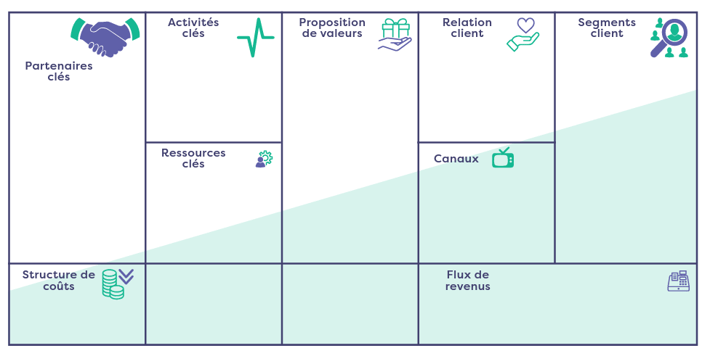
What’s a business model? While the term might sound a bit technical, the concept is actually quite simple. It’s a one-page table that summarizes the business model you’ve chosen for your business project.
Source: businessplanmodels.com
This table is always divided into 9 boxes whose order is also always the same:
-
 Key partners
Here, you will list the key partners for your business—that is, those without whom your company cannot operate properly. As a car rental company, these might include car dealerships that will help you build your fleet, or the airport in your region, if you plan to provide customer service directly at the airport.
-
 Key activities
What types of business will keep your car rental agency running? Long-term or short-term rentals, for example?
-
 Key resources
Basically, what do you need to operate, in terms of resources: physical (vehicles, of course, a facility, a parking lot, tablets, a car wash station...), intangible (fleet management software, a website, insurance...), human resources (sales staff, customer service, mechanics…), and financial resources (it’s worth breaking this down if you haven’t won the lottery, so you have a clear picture of your needs).
-
 Your value proposition
A value proposition is a short statement that summarizes what your concept offers your target audience or persona. When crafting it, focus on what you can offer your persona to solve their problem (added value), not on what you do (features).
👉 Here are a few examples to help you get a clearer picture:
-
-
- outsource your company's vehicle fleet
- rent beautiful vehicles for a wedding
- go on roadtrips in safe and efficient vehicles
- etc., etc.
-
-
 The customer relationship
How do you plan to satisfy your customers? What steps will you take to be there for them when they need a vehicle at the last minute or when they break down in the middle of nowhere?
This may include providing a personal concierge, customer service via email, phone, and WhatsApp, a loyalty program, self-service vehicle pickup, and more...
-
 Distribution channels
Here you will list the different contact points chosen to acquire and interact with prospects.
-
 Targeted customer segments
It’s often said that trying to appeal to everyone means appealing to no one. What specific customer base are you targeting? It could be tourists or business travelers, but you can further “niche” your approach and choose to target drivers without licenses, ride-hailing drivers, people moving homes, or those who make deliveries… The possibilities are endless, but they depend on your market research!
-
 Your cost structure
Fixed costs, variable costs: It is essential to accurately forecast your agency’s expenses in order to properly tailor your funding requests and determine the revenue needed to stay afloat.
-
.jpg?width=48&name=les%20flux%20de%20revenus%20(1).jpg) Your sources of income
Your sources of income
How will you make money and keep your business afloat? What revenue streams does your business generate? Explain here how your prices are set, what the average price is based on customer segment or service offering, or whether you plan to offer a subscription, for example.
4 - The right tools for efficiency
If you’ve managed to stay motivated so far despite all the work involved in setting up your business, let’s take a look at some bonus tools that can make your life easier as a car rental business owner. After all, with so many tasks to handle, there’s no need to make things harder on yourself with time-consuming and tedious processes.
A tool for managing rental schedules
Don’t try to create your rental schedule in Excel—you’ll waste valuable time trying to hack the spreadsheet’s features to create a practical schedule. When connected to your booking engine, your scheduling tool can automatically populate itself with booking data.
A billing solution and a contract generation software
are also directly linked to the booking engine, allowing you to quickly retrieve all tenant information.
A vehicle inventory application
allowing you to photograph and digitally annotate the damage found to speed up the process and ensure nothing is overlooked.
A fleet maintenance monitoring tool
to centralize inspection reports and technical checks, track repairs, and receive alerts so you never miss a maintenance task and can plan ahead.
A ticket management software
automatically providing information on drivers who have committed traffic violations to the authorities.
A performance monitoring dashboard
highlighting the key metrics of your business (turnover rate, number of vehicles in maintenance, revenue, etc.) to provide greater visibility and enable more responsive decision-making.
Fleetee Manager, the complete suite of fleet management tools
Fleetee Manager consists of three tools that will help you manage your rental business.
.jpg?width=316&name=Etat%20des%20lieux%20num%C3%A9rique%20(2).jpg)
-
Fleet management software
With Fleetee, you can use a computer, smartphone, or tablet to create pre-filled quotes and rental agreements, manage your fleet’s maintenance schedule, and track your turnover rate and revenue through a simple and intuitive dashboard.
-
The state of the premises
This process is made easier with the Fleetee Check app. Completed entirely digitally via a smartphone or tablet, each instance of damage is documented with a photo, and the report is digitally signed by the customer, enabling automatic comparison during the vehicle’s return inspection.
.jpg?width=359&name=Etat%20des%20lieux%20num%C3%A9rique%20(3).jpg)
-
To offer an autonomous service
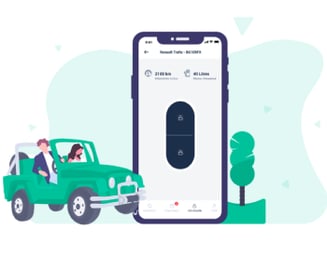
Fleetee Connect is a car-sharing device that allows your customers to rent your vehicles 24/7 without the need for staff intervention. Customers select the available vehicle of their choice from the app, book online, and on the day of the rental, unlock the car using the app. The car starts once the customer has completed the pre-trip inspection. If you’d like to explore the Fleetee Manager tools, the first 14 days of the trial are free and require no commitment. Our sales team is available to answer all your questions at contact@fleetee.io.



.png?width=500&height=115&name=logo%20fleetee%20(blanc).png "Fleetee")